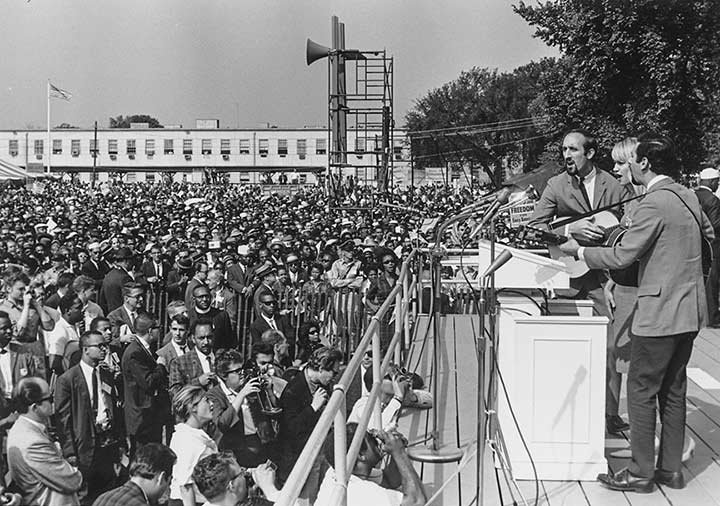
Washington State has long been a dynamic epicenter for profound social change, its rich history woven with the tireless efforts of individuals and organizations championing equality and justice. From the foundational struggles of the early 20th century to the intricate, multifaceted movements of today, Civil Rights and Social Justice Movements in Washington State have consistently driven progress, shaping legislation, influencing public discourse, and fostering a more equitable society. This isn't just a historical footnote; it's a living legacy that continues to evolve, reflecting the diverse tapestry of its residents and their unyielding pursuit of a fairer world.
At a Glance: Washington State's Enduring Fight for Justice
- A Deep-Rooted History: Washington's civil rights struggles began in earnest in the early 20th century, particularly with African American advocacy.
- Diverse Movements: Beyond racial justice, the state has been a crucial battleground for Indigenous, immigrant, disability, LGBTQ+, and environmental rights.
- A Robust Ecosystem: Washington is home to nearly 400 civil rights and social justice organizations, employing hundreds and managing significant revenue and assets.
- Influential Organizations: Groups like the Northwest Immigrant Rights Project (NWIRP), Disability Rights Washington, and the ACLU of Washington play significant roles in current advocacy.
- Legislative Milestones: Key state laws like the Public Accommodations Act and the creation of the Board Against Discrimination underscore Washington's commitment to protecting civil liberties.
- Ongoing Activism: The fight for justice is a continuous journey, with new challenges and opportunities for engagement emerging constantly.
A Legacy Forged in Early Activism: Tracing Washington's Civil Rights Roots
The seeds of civil rights activism in Washington State were sown long before national movements gained widespread traction. African American civil rights organizations, for instance, established a significant presence in the state as early as the turn of the 20th century, working to dismantle segregation and advocate for equal opportunities. These early efforts often mirrored, yet sometimes diverged from, the broader national civil rights movement, reflecting the unique demographics and challenges of the Pacific Northwest.
You'll find that local groups often tackled issues directly impacting their communities, sometimes innovating strategies that would later be adopted elsewhere. The experiences of individuals and local organizations provide a compelling lens through which to understand the complex tapestry of this history.
Early Champions and Organizations That Paved the Way
Washington's civil rights narrative is rich with the stories of courageous individuals and resilient organizations. Figures like Horace Cayton, a prominent journalist and civil rights advocate, and Samuel McKinney, a highly influential minister and community leader, were instrumental in challenging racial discrimination. Dorothy Hollingsworth left an indelible mark through her educational advocacy, while Carl Maxey, a trailblazing attorney, fought tirelessly against injustice in the legal system. Other notable figures include Charles V. Johnson, Edwin Pratt, Sam Smith, Larry Gossett, and Tyree Scott, each making significant contributions to the movement. Their stands and actions profoundly shaped the local landscape of civil rights.
These individual efforts were often bolstered by structured organizations. The National Association for the Advancement of Colored People (NAACP) had a vital presence, with its local chapters leading the charge on issues like fair housing and employment. The Urban League also played a crucial role in improving economic and social conditions for African Americans. Groups like the Christian Friends for Racial Equality and the Central Area Contractors worked to create opportunities and challenge systemic barriers, particularly in Seattle's Central Area. To dive deeper into the historical context and the powerful stories of these early advocates, you might want to Explore the wa black hub, which offers a closer look at the Black experience in Washington.
Legislative Milestones: Codifying Rights and Challenging Discrimination
Beyond direct action and community organizing, the civil rights movement in Washington achieved significant legislative victories. A landmark achievement was the Washington State Public Accommodations Act, which aimed to prohibit discrimination in public places. Its eventual passage was a testament to decades of persistent advocacy, demonstrating the power of grassroots efforts to translate into tangible legal protections.
Furthermore, the creation of the Washington State Board Against Discrimination marked a crucial step towards establishing an official body dedicated to investigating and addressing acts of discrimination. These legislative frameworks provided legal recourse for those who had been wronged and signaled a growing recognition within the state government that civil liberties needed active protection. However, passing these laws was only the first step; their enforcement and expansion would become ongoing battles.
Beyond the "Traditional" Movement: Expanding the Fight for Justice
While the early civil rights movement often focused on racial equality, the landscape of social justice in Washington State has always encompassed a broader spectrum of rights. As communities became more diverse and understandings of justice evolved, new movements emerged, each fighting for dignity and equity for specific groups.
Indigenous Rights: A Sovereign Struggle
Washington is home to numerous Indigenous nations, and their struggle for sovereignty, treaty rights, and cultural preservation is a fundamental component of the state's social justice history. From challenging fishing rights restrictions to advocating for environmental protection on ancestral lands, Indigenous communities have consistently fought to uphold their rights and ensure their voices are heard. This includes efforts to restore traditional lands, protect sacred sites, and address the historical injustices that continue to impact tribal communities.
Immigrant Rights: A Growing Voice in the Evergreen State
As a state with a significant immigrant population, particularly from Asia and Latin America, Washington has seen the rise of powerful immigrant rights movements. Organizations like the Northwest Immigrant Rights Project (NWIRP), one of the largest civil rights and social justice employers and revenue earners in the state, are at the forefront of this work. They provide legal assistance, advocate for humane immigration policies, and fight against discrimination and xenophobia. Their efforts are crucial in protecting vulnerable populations and ensuring that new Washingtonians have the opportunity to thrive.
Disability Rights: Advocating for Full Inclusion
The disability rights movement in Washington has championed the cause of accessibility, equal opportunity, and independent living for people with disabilities. Organizations like Disability Rights Washington have been instrumental in advocating for legislative changes, challenging discriminatory practices, and ensuring that individuals with disabilities have the same rights and opportunities as everyone else. Their work spans areas from accessible transportation and public spaces to employment and educational equity.
LGBTQ+ Rights: Progress and Persistent Challenges
Washington has a proud history of advancing LGBTQ+ rights, being an early adopter of protections against discrimination based on sexual orientation and gender identity, and legalizing same-sex marriage prior to the national ruling. Organizations like The Pride Foundation have played a significant role in funding, advocating, and building community for LGBTQ+ individuals. Despite these legislative victories, the movement continues to address issues like transgender rights, youth homelessness, and combating prejudice in various forms. Pridefest, a major organizer, contributes significantly to celebrating and advocating for the LGBTQ+ community.
Environmental Justice: Equity in a Green State
Given Washington's emphasis on environmental stewardship, the concept of environmental justice has gained increasing prominence. This movement recognizes that environmental burdens—like pollution and lack of access to green spaces—disproportionately affect low-income communities and communities of color. Advocates work to ensure that all communities have a right to a healthy environment, pushing for equitable policy decisions that protect both people and the planet.
The Modern Landscape: How Washington's Social Justice Ecosystem Operates
Today, Washington State boasts a robust and vibrant ecosystem of civil rights and social justice organizations. The sheer scale is impressive: according to CauseIQ, there are nearly 400 such organizations across the state. These groups collectively employ 983 people, generate over $162 million in revenue annually, and manage assets totaling $285 million. This isn't just a collection of passionate individuals; it's a significant sector with substantial economic and social impact.
The Role of Large Organizations: Driving Broad Impact
The landscape is diverse, but large organizations often spearhead comprehensive campaigns and provide critical infrastructure. Groups like the American Civil Liberties Union of Washington (ACLU of Washington Foundation and ACLU of Washington), Momsrising Education Fund, The Pride Foundation, and the aforementioned Northwest Immigrant Rights Project are significant players. They employ large staffs, secure substantial funding, and often engage in multi-faceted advocacy, from legislative lobbying to public education and legal challenges. These organizations frequently address a wide array of issues, acting as watchdogs for civil liberties and pushing for systemic change. Even the Second Amendment Foundation, while perhaps viewed differently by some, contributes to the overall revenue figures for civil rights and advocacy groups, highlighting the breadth of issues covered by "rights" organizations.
The Vitality of Smaller, Grassroots Efforts
While large organizations command significant resources, it's important to remember that the strength of the movement also lies in its smaller, often hyper-local, grassroots efforts. Organizations with less than $1 million in revenue account for a notable 17.8% of combined nonprofit revenues, demonstrating their collective impact. These smaller groups are often deeply embedded within specific communities, addressing very particular needs and fostering direct engagement. They are crucial for building local power, nurturing new leaders, and ensuring that the diverse voices of Washington's communities are heard. Together, large and small organizations form a resilient network, each playing a critical role in advancing justice.
Strategies for Change: How Movements Drive Impact
The journey of civil rights and social justice in Washington is marked by a diverse array of strategies, each chosen for its potential to create impact. Understanding these approaches helps illuminate how change actually happens.
Advocacy and Lobbying: Shaping Legislation
One of the most direct ways movements drive change is through advocacy and lobbying. Organizations actively work to influence lawmakers, pushing for new legislation that protects rights or challenging existing laws that are discriminatory. This involves research, public education, and direct engagement with elected officials. For example, the ongoing efforts to strengthen police accountability laws or expand voting rights often involve extensive lobbying campaigns.
Legal Action: Challenging Injustice in the Courts
The courtroom has long been a critical arena for civil rights. Organizations frequently engage in strategic litigation, filing lawsuits to challenge discriminatory practices, uphold constitutional rights, or set legal precedents. The ACLU of Washington, for instance, is well-known for its legal battles that have protected freedom of speech, privacy, and equality. These legal victories can have far-reaching effects, ensuring that laws are applied fairly and justly.
Community Organizing: Building Power from the Ground Up
Effective social justice movements are built on the power of organized communities. This involves mobilizing residents, educating them about their rights, and empowering them to advocate for themselves. Community organizing fosters leadership within affected groups and ensures that solutions are culturally relevant and truly address local needs. It's about bringing people together to collectively demand change, whether through protests, town halls, or local campaigns.
Public Education and Awareness: Shifting Hearts and Minds
Changing laws is one thing; changing hearts and minds is another. Public education and awareness campaigns are vital for dismantling prejudice, challenging stereotypes, and fostering empathy. This can take many forms, from educational workshops and media campaigns to public art installations and community dialogues. By raising awareness about issues like systemic racism, ableism, or LGBTQ+ discrimination, movements seek to create a more informed and inclusive public.
Direct Action: Making Voices Heard
Sometimes, direct action is necessary to draw attention to injustice and pressure decision-makers. Protests, marches, boycotts, and civil disobedience have historically been powerful tools in the civil rights arsenal. While often controversial, these actions can force public conversation, disrupt the status quo, and demonstrate the collective will of a community demanding change.
Challenges and Resilience: Navigating Ongoing Battles
Despite significant progress, civil rights and social justice movements in Washington State continue to face considerable challenges. The fight for justice is never truly "over"; it's an ongoing process of adaptation and resilience.
Persistent Disparities: The Gaps That Remain
Even with progressive legislation and a strong advocacy ecosystem, deep-seated disparities persist. Issues like racial wealth gaps, educational inequity, housing discrimination, and disproportionate rates of incarceration continue to affect marginalized communities. These aren't just isolated problems; they are often interconnected, requiring comprehensive, systemic solutions.
Political Backlash and Shifting Tides
Social justice movements frequently encounter political backlash, with efforts to roll back protections or undermine advocacy. This can manifest in legislative attempts to restrict rights, judicial appointments that challenge established precedents, or rhetoric that demonizes marginalized groups. Navigating these shifting political tides requires constant vigilance and strategic adaptability from advocates.
Funding and Resources: The Perpetual Struggle
While Washington's social justice sector commands significant revenue, securing consistent funding remains a challenge for many organizations, especially smaller, grassroots groups. The competition for grants and donations can be fierce, and the demands placed on these organizations often exceed their available resources. This financial pressure can limit their capacity to respond to emerging issues or sustain long-term campaigns.
The Evolving Nature of Justice: New Fronts Emerge
The definition of "civil rights" itself is constantly expanding, with new issues emerging that demand attention. For example, the intersection of technology and civil liberties, the ethical implications of AI, or the rights of migrant workers in evolving agricultural industries present new frontiers for social justice advocacy. Movements must continuously adapt their focus and strategies to address these evolving challenges.
Your Role in Washington's Social Justice Journey
The history of civil rights and social justice in Washington State isn't just a story of past heroes; it's an ongoing narrative that you can help shape. Whether you're passionate about racial equity, immigrant rights, environmental justice, or any other facet of social change, there are tangible ways to contribute.
Educate Yourself: Be an Informed Citizen
Start by deepening your understanding. Use secondary sources like historical accounts and academic analyses to grasp the context, then delve into primary sources like archival documents and oral histories to understand the lived experiences. The Washington State Library and Washington State Archives offer invaluable resources, and their librarians and archivists can guide you to specific materials relevant to issues taken up by local civil rights organizations or the experiences of groups and individuals. Knowing the historical questions to ask—like who Horace Cayton or Dorothy Hollingsworth were, or the impact of the Washington State Public Accommodations Act—is your first step.
Support Organizations: Time, Talent, or Treasure
Consider volunteering your time and skills with a local organization. Many groups, large and small, rely on volunteers for everything from administrative tasks to community outreach and legal support. If you're able, financial contributions are also vital; every dollar helps sustain crucial advocacy work. Remember, even smaller organizations play a huge role, so don't overlook local grassroots groups that might be doing impactful work in your immediate community.
Advocate for Change: Speak Up and Speak Out
Your voice matters. Participate in local forums, attend public meetings, and contact your elected officials about issues you care about. Join advocacy campaigns, sign petitions, and support legislative efforts that advance civil rights. Even sharing accurate information on social media can contribute to raising awareness and shifting public opinion.
Practice Everyday Justice: Beyond Grand Gestures
Social justice isn't just about grand protests or legislative battles; it's also about how you interact with the world every day. Challenge prejudice when you encounter it, advocate for inclusivity in your workplace or school, and strive to understand diverse perspectives. Every small act of kindness, empathy, and advocacy contributes to building a more just and equitable society.
Looking Ahead: The Evolving Frontier of Justice
The civil rights and social justice movements in Washington State represent an unbroken chain of human courage, resilience, and an unwavering commitment to the promise of equality. From the initial battles for basic rights in the early 20th century to the complex intersectional movements of today, Washingtonians have consistently strived to build a society where justice is not just an ideal, but a lived reality for all. The path ahead will undoubtedly present new challenges and demand evolving strategies, but the spirit of activism and the pursuit of a more just world will continue to define the Evergreen State.